Friday, December 7, 2012

WHAT THE EXPERTS SAY: Historical Romance Author Grace Elliot


Grace Elliot, Author
HOPE'S BETRAYAL
History enthusiast and author of historical romances Grace Elliot joins us today to talk about her newest novel HOPE’S BETRAYAL – a story about a heroine caught smuggling by the Captain appointed to stop it. Although the two begin to appreciate one another, the choices presented to the couple are not simple:  it is a love where either Hope betrays her own kind, or Captain Huntley is court-marshaled.

A veterinarian by day, Grace is inspired to write by the prodding of one of her five cats.  She also has two teenage sons, a husband and “bearded dragon” looking on.  She is committed to providing her readers with escape, and her addiction to history enables her to offer unique settings to enhance the romance. 

Q: What led you – a true cat aficionado-- to write historical romances? I’ve been a cat-lover all my life, and I write mysteries, which seems more in keeping with the feline mystique.

Grace Elliot: What a good question! The answer lies in that although my cats are not my direct inspiration, they encourage me to write. Let me elaborate. My house is ruled by five cats but one in particular, Widget, is my 'writer's cat.'  Whilst sitting on an old sofa with a laptop on my knee, Widget snuggles up against my leg. This does great things for my concentration because when I get up for a comfort break, she pinches the warm spot and looks hurt when I try to reclaim the seat.  As a result I've learnt not to fidget or get up unnecessarily, since a disapproving look from a cat is indeed a humbling thing.

Q:  How important is the history part of your romances? Could you have the same plots in a modern setting?

Grace Elliot: History is vital to my romances because of the tension generated by characters rebelling against the social norms of the 19th century.

It's always fascinated me to ponder how regency women reacted to the restrictions of a male dominated world. How would I react if society dictated my role was solely to please my husband and breed children? Put it this way, it wouldn’t be long before I exploded in one way or another. And that's what happens to my heroines when events push them over the edge and they realize they are as capable as their male counterparts at taking control.

So in short, no I don't think the plots would work in a modern setting - besides, it's the escapism of recreating the past that is the main motivation behind my writing. 

Q:  What do you do to make your characters compelling? What do you do to make your readers care whether your heroine and hero get together?

Grace Elliot: Characters are key. 

I aim to make my characters a bit different from those inhabiting traditional regency romances. For instance, in HOPE’S BETRAYAL the heroine is a smuggler and the hero is the naval captain sent to stamp out all illegal activity. But this doesn’t mean that Hope Tyler, as a smuggler, is a 'romantic' heroine, far from it, she is a gritty, determined character who has been forced into breaking the law in order to provide food for her family. And when Captain George Huntley captures her, she challenges his bigoted views on smuggling, pointing out that the tea his mother drinks and the lace on her dress, are all courtesy of the smuggling trade.

As to making the reader care, that lies in the simmering sexual attraction between characters with irreconcilable differences.

Q:  What makes your romances special?

Grace Elliot:  I write for escapism; this means I picture a scene and imagine myself there to soak up the sights, sounds and smells. My aim is to write the sort of page-turning historical romances that I love to read, and only readers can say if I have succeeded or not - but I live in hope of this making my romances special.

Q:  Are your books largely for entertainment, or do you also try to deliver a message?

Grace Elliot: My books have themes, for instance EULOGY’S SECRET is about not judging appearances, whilst HOPE’S BETRAYAL considers the price of morals, but that aside, the novels are meant to be absorbing historical romps with engrossing characters and addictive plots. I would equate my books to a glass of red wine; something to make you feel warm inside on a cold winter's night (with a cat on your lap, of course!)

Q: What tips would you give to others considering a career in writing?

Grace Elliot:  My attitude is encompassed by the saying; "The harder I work, the luckier I become." In other words, writing is hard work and few authors get instant success (if ever!) Only write if the thought of not doing so leaves an empty void in your soul - because if your main motivation is to become rich and famous, then frustration surely awaits.

Q: When you’re not writing, what do you do? Feed the cats? Hobbies? Sailing? Knitting? Standup comedy? Feed the cats? Favorite music?  Favorite authors? Do you have a muse? Pet the cats?

Grace Elliot: History is a big part of my life. I live a short distance from London and love visiting to explore the lesser known spots, back alleys, hidden courts and the like. It's amazing how much history there is even in something simple like a street name, or a building, and I love taking photos to find out more about them later. My current obsession is with pubs (!) named after royalty - it's amazing how many there are named after the Prince Regent …I feel a blog post coming on. That aside, my cat obsession is a big part of who I am, as is reading. I also jog short distances and am rather partial to curry.

About Grace Elliot
Grace Elliot leads a double life as a veterinarian by day and author of historical romance by night. Grace believes intelligent people need to read romance as an antidote to the modern world. As an avid reader of historicals she turned to writing as a release from the emotionally draining side of veterinary work.

Grace lives near London and is addicted to cats. The Elliot household consists of five cats, two teenage sons, one husband, a guinea pig - and the latest addition - a bearded dragon!


One wild, winter's night two worlds collide.

Known for his ruthless efficiency, Captain George Huntley is sent to stamp out smuggling on the south coast of England. On a night raid, the Captain captures a smuggler, but finds his troubles are just beginning when the lad turns out to be a lass, Hope Tyler.

With Hope as bait, the Captain sets a trap to catch the rest of the gang. But in a battle of wills, with his reputation at stake, George Huntley starts to respect feisty, independent Hope. Challenged by her sea-green eyes and stubborn loyalty Huntley now faces a new threat - his growing attraction to a sworn enemy. But a love where either Hope betrays her own kind, or Captain Huntley is court-marshaled, is not an easy destiny to follow.

Buy Links
HOPE’S BETRAYAL is FREE on Amazon Kindle until 9th December 2012!

Excerpt


Lass Not a Lad.- Captain Huntley Makes a Discovery About his Prisoner.

Alone with his prisoner the Captain set to work, his face all harsh angles in the lamplight. First to stem the bleeding. Working with deft hands, he pulled the bloodstained scarf from the felon's head. Surprise registered, as he noted the delicate ears and elegant neck. The boy’s hair gleamed like polished-coal in the lamplight; tied back in a pony tail, black-as-the-devil’s  heart.
Huntley reached for a rag to wipe blood from the boy's eyes and cheek. Soft skin emerged from beneath the clotted mess. The boy was young…a round face with pointed chin, a tipped nose …and lips, softly parted and provocatively plump….just ripe for kissing. A flush of heat warmed Huntley's cheeks. What was he thinking?
Wiping his sleeve across his eyes he forced himself to continue. He bathed the laceration, cleaning away sand and blood. Something about this lad had stirred deep emotions and the captain didn’t like it one little bit. He glanced toward the door, not wanting to be alone with the smuggler and these strange feelings he stirred.
“What the devil's taking that wench so long?”
The fire was crackling nicely now, steam rising from the lad's clothes. But it wasn’t warm enough; cold could kill every bit as much as blood loss.
"Hell's teeth, do I have to do everything myself?”
With rising irritation, Huntley set to stripping the lad of his wet clothes.
He peeled back the patched jacket, twice its weight with water, and dropped it to the floor. A patched and frayed shirt, sticky with blood, clung to the lad’s lean frame. Huntley tugged the shirt-tail free of the lad’s sodden breeches and off over his head, with the result that the Captain's pulse raced alarmingly.
“Get a grip, man.” Huntley muttered.
The lad had unexpectedly slim shoulders, a silver stiletto strapped to his thin upper arm.
“Naughty.”
Unsheathing the knife he held the elegant blade toward the firelight; a finely crafted weapon of silver filigree over an ivory handle— a lady’s weapon, and obviously expensive.
“Who did you steal this from, then?”
Placing the stiletto safely out of reach, he turned back to the table. Stripped of his shirt, it seemed the lad had broken ribs, for his chest was strapped. The bindings were soaked and must come off. Shifting the unconscious lad into a sitting position, balancing him against his shoulder, Huntley unwound the bandages.
As he lay the lad back down on the table, Huntley was suddenly struck by the peculiar shadows playing across the boy’s chest. A flush of blood heated his cheeks. That explained a lot!  Huntley’s mouth dropped open; he threw back his head and laughed aloud with relief.
“Tis not a lad….but a lass!"
Alone in the scullery with a half-naked girl…no, not a girl, for she had the soft curves of a woman. Huntley took a step back. The sense of relief was overwhelming, that it was a woman who had excited his body so. He looked around for someone to share his astonishment, but the maid had not yet returned.
In his experience women were tiresome, wearisome creatures that sapped the spirit and drained the mind, but he studied this one with interest. Dark lashes lay brushed against her cheek, an almost catlike tilt to her closed eyes. Her skin was clear, fresh, and unblemished. Her face was wide, round even, but with a pointed chin and a nose turned up at the end. In all he decided, she was beautiful with the stubbornness of a mule and fragility of a china doll. She had been a worthy advisory on the dunes; agile, brave and resourceful and it thrilled him to the core. Lost in thought, Huntley shrugged off his outer coat and covered her over, then removed himself to a respectable distance.
Nothing had changed, he told himself. She was a felon and would pay the penalty demanded by law. And if Huntley felt uneasy at the prospect he suppressed the emotion, it was just that he had to get used to the notion of interrogating a woman.

Other Works by Grace Elliot


Greed, prejudice and a stolen identity. In the four weeks since her guardians’ death, Eulogy Foster has lost everything. Penniless and alone she seeks the help of her estranged brother, Lord Lucien Devlin. But Devlin throws Eulogy onto the streets and the mercy of a passing stranger, Jack Huntley, who becomes an unlikely ally. As Eulogy seeks the truth behind her birth, she is drawn into the world of art and artists, where her morals are challenged and nothing is as it seems.

A story of blackmail, duty and an unexpected love.

After publically humiliating a suitor, Miss Celeste Armitage is sent from the Ton in disgrace and resolves never to marry. But when she finds a sketch book of nude studies and discovers the artist is her hostess's eldest son, Lord Ranulf Charing, she finds herself dangerously attracted to exactly the sort of rogue she is sworn to avoid. Nothing is as it seems. Lord Ranulf's life is a facade and he is being blackmailed over his late brother's debts.

A series of short essays on feline historical trivia (non-fiction) 

Did the Victorian's really eat cat pies?
Who invented the cat flap?
Do black cats bring good or bad luck?
Why did Victorian veterinarians have such a bad reputation?
Is cat-gut really made from cats?
How did cats win a battle?


Links

Twitter: @Grace_Elliot

Facebook                        
Amazon author           

Monday, December 3, 2012

WHAT THE EXPERTS SAY: Fantasy Author Susan Leigh Noble


Susan Leigh Noble, Author
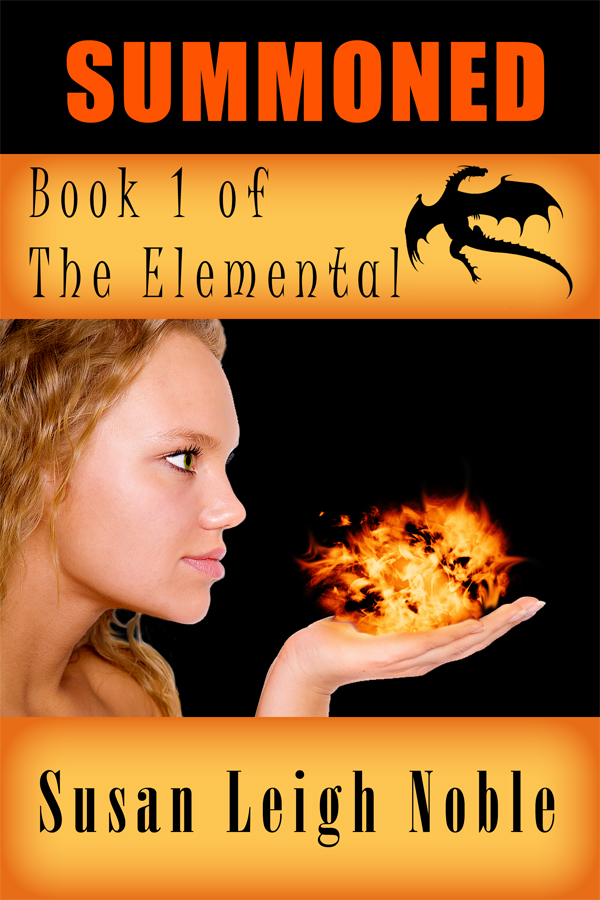
DESTINY, Book 3 of The Elemental

Welcome to Fantasy Author Susan Leigh Noble. She has just published DESTINY, Book 3 of her series The Elemental – whose main character Lina is counseled by Tosh, her telepathic cat. Lina herself can start fires with mere thought. In DESTINY she must find a lost scepter to save her land.

A big San Antonio Spurs basketball fan, Susan lives in Texas with her husband, two children and – as you might have guessed given her telepathic cat character -- three cats.  She is also an active community and school volunteer.


Q: In a fantasy world, what pulls in your readers? Characters? Back story? Suspense? How important is believability?

Susan Leigh Noble: I think with all stories, at least for me, it is the characters that pull me in. If I care about the characters, I want to continue reading.

I also believe that if you are creating a fantasy world, you need to make everything as believable as possible. You need to establish rules for your magic. By this I mean set a consequence of using magic because otherwise your magician would be all powerful and then what would be the conflict in your story? They need to have some weakness as in using magic drains them or is so dangerous that a simple mistake could kill them.

And when you create a world with mythical creatures such as telepathic cats and dragons, then your characters shouldn’t find anything odd about seeing them (unless they perhaps are rare). If your characters accept these then your reader will too

 Q: I admit I’m a cat-lover. I have two who keep me in line. However, neither of them is telepathic, although they certainly appear to know it all. When you write about Tosh and your other characters, how do you make them credible and compelling? What makes your readers care about your characters?

Susan Leigh Noble: I grew up with cats and find it very easy to have them as characters in my story. I chose to make them telepathic, so they could have a bigger role, but I am certainly glad none of my cats have that ability. I can just imagine them nagging me to feed them now - and I mean right NOW.

I think part of what makes any character believable is the details. With cats, even telepathic ones, you need to add cat-like behavior; they rub their cheeks on your hand or flip their tail in anger. And with all characters - cats, humans or dragons - you have to have bad qualities as well as good. And I think it is the recognizable insecurities and frailties that connect readers to the characters.    

Q: Do your characters push you around (I’m sure Tosh does. Even if telepathic he’s still a cat) and make you write what they want? Or are you in control?

Susan Leigh Noble: Oh, I think every author likes to think they are in control just as every cat owner likes to believe that too. But we all know the truth. Actually, I never really consider myself in control of my characters but like to just let the story unfold.

Q: What makes a hero/heroine? And on the flip side, what makes a villain?

Susan Leigh Noble: A hero/heroine is someone who goes through the conflict, whether it is an internal struggle or a physical feat. I think a true hero/heroine is someone who puts others first.  On the other side, and this is a very stereotypical answer, the villain is usually self-absorbed and only seeking to please themselves. He or she seeks to gain something for him/herself without caring about others. Of course, there are all sorts of variations on both heroes and villains and that is part of the fun of creating these characters and writing their stories. 

Q: As a parent, you write about the need for balance between pursuing your writing and other interests and participating in your children’s lives. What would you advise the busy parents who also want to be writers?

Susan Leigh Noble: My advice would be to get used to writing whenever you have free time, whether that means getting up early or waiting to write when the children are in bed at night. I find that carrying a notebook in my purse allows me to jot down story ideas or plan out chapters while waiting to pick up the kids from school or while my son is at his karate class. You have to be willing to find the time to write and realize that writing a novel will take longer than if you could devote all your time to it.  

Q: Tell us something about yourself, e.g., do you like to read? Eat? Go to plays? What’s your favorite holiday, book, author, character, play, movie, celebrity? What do you do when you’re not writing? Do you have a muse? What's your favorite charity? If you weren’t a writer, what would you be?

Susan Leigh Noble: Wow that is a lot of questions. I do love to read but honestly don’t find a lot of time lately between my own writing and taking care of the kids. I am a big San Antonio Spurs basketball fan, so I also try to find time to watch the team, though I usually also use that time to organize my files or go through all the paperwork the kids bring home from school. (Yep, I’m always multi-tasking.)

I guess my favorite holiday is Christmas. I love all the decorations and music and the fun of buying and receiving gifts. It is just such a happy time of the year. But I have a hard time picking out other “favorites” such as movies, books, and authors because I just love so many things that it is difficult to pick a favorite. I certainly couldn’t tell you, which was my favorite child or cat. 

About Susan Leigh Noble

Susan Noble has always loved dragons and magic so it is no wonder that she became an author of fantasy novels. As a cat lover, she also had to throw in a telepathic cat to the mix in her The Elemental trilogy.

When she isn't writing, Susan is an active volunteer in her neighborhood and at her children's schools. She lives with her husband, two children and three cats in Texas

About DESTINY
Book 3 of The Elemental

Destroying Quietus should have stopped the destruction to the Land. But it hadn't. Slowly, the barren areas continue to grow destroying everything in their path. None of Lina's Elemental powers can repair the damage while the Land remains contaminated by magic.

But there is an ancient scepter created by a Learner that they believe will lift this magical barrier. Before Lina can claim it, the scepter is stolen. Now Lina and Val must race to find the scepter and end the destruction to the Land once and for all.

Excerpt DESTINY

A loud crashing sound behind her caused Lina to whirl around. A third Gunn entered the clearing. Val ran to confront it with Cole right behind him.

Cole swung at the beast. His battle ax bounced off its thick hide. The Gunn
swung at him, but the guard danced out of the way. Val worked his way behind
the beast as Darnel distracted it by shooting an arrow into the beast's
vulnerable neck.  

"Watch out!"

The call came from behind her. Lina swung around in time to see the Gunn
open his mouth to spew his deadly poison right at Drake. Without a thought,
she sent a swift wind toward him, directing the poison harmlessly toward the
ground. She didn't see Royce running to Drake's aid. The poison hit the man
in the face and shoulder.

Royce screamed. It was a gut-wrenching cry of sheer agony. Lina watched in
horror as the green liquid melted away his skin. Royce clawed at his face as
he fell to his knees. Suddenly, the horrible sound of his scream died away
as he fell to the ground.

"No!" Lina cried, falling to her knees in disbelief. Tears streamed down her
face as she looked at the lifeless body on the ground; the body of the man
she had killed.

Other Books by Susan Leigh Noble

Book 1 of The Elemental

At the age of four, Lina discovered she could start fires with a mere thought - a trait which had died out long ago. Cautioned by her telepathic cat, Tosh, she kept this Elemental power a secret to avoid being an outcast. That was easy to do growing up in the remote grasslands of Zena.

Now as an adult, she had no plans to leave her beloved homeland. So when a strange urge compels her to travel north to an unknown destination, Lina resists this unnatural feeling. But her plans to stay in Zena are taken out of her control when she is kidnapped by gypsies and wakes in a foreign land.


Book 2 of The Elemental

The Learner Ben Dar had been destroyed by the reluctant use of her powers. In the shadow of his fallen fortress, she had learned the truth – that she was the center of a thousand-year-old prophecy claiming the rebirth of the Elementals – an ancient race dedicated to caring for the Land.

Now Lina and those with traces of Elemental power train in the mountains of South Point in the hopes that they can defeat this unknown danger to the Land. Will her powers be enough to stop the destruction of her homeland?


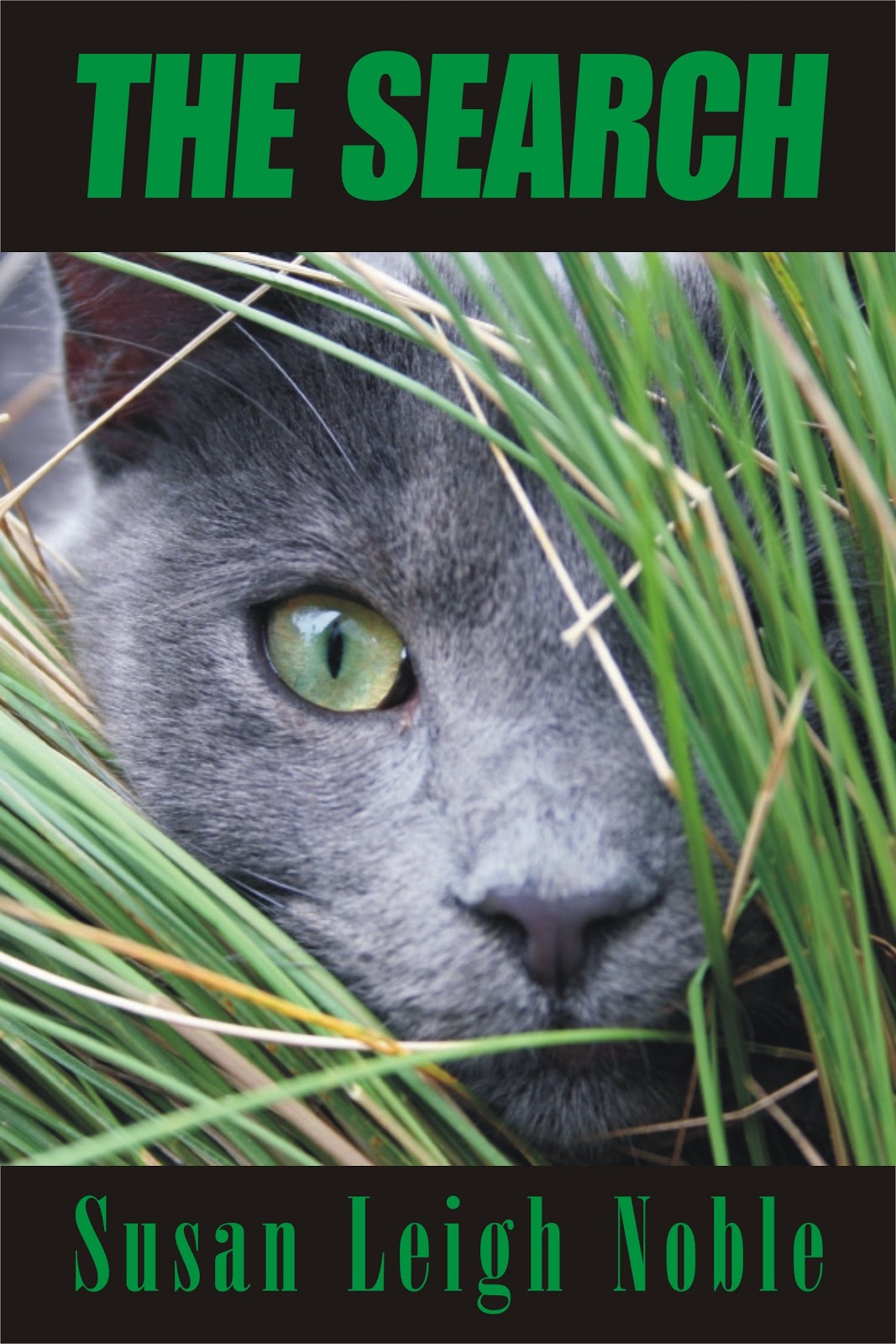
For over a thousand years, telepathic cats known as STACs have faithfully searched for those wit power over the elements looking for the one foretold to save the Land. None have questioned their duty to fulfill this ancient task. 

But when Tosh’s latest charge is murdered because of his Elemental powers, Tosh considers abandoning The Search. Will a glimpse of the future destruction be enough to change his mind?

Links to Author

Blog 
Twitter - @SusanLeighNoble

Purchase Links:


Friday, November 30, 2012

WHAT THE EXPERTS SAY: "Rooting a Story Firmly in the ‘Where’" by European Romance Novelist Hannah Fielding


Hannah Fielding, Author
BURNING EMBERS

European romance novelist Hannah Fielding  brings us a novel that truly “transports  you to another place," as described by one reviewer.  Her novel BURNING EMBERS is set in 1970s Kenya and incorporates the backdrop of the newly independent country. In the following article, she highlights the relevance of setting and shares some tips on how to use setting to enhance a story.

Prior to becoming a full-time author, Hannah reared two children and ran her own business renovating rundown cottages. Today she and her husband spend half their time in Kent and the rest in their home in the South of France.


Rooting a Story Firmly in the ‘Where’
By Hannah Fielding

I have always been a writer who pays keen attention to setting; to describing carefully sights and sounds and smells and tastes and textures. Since childhood I’ve loved writers who really paint a scene in your mind, and I knew when I started writing romance that I wanted to transport my readers to the time and place in which I situate the story. Place holds such power to colour a story, and I believe any story must be firmly rooted in the ‘where.'

I have written several novels now, and vivid setting is a common factor across each. From Andalucía, Spain to Venice and Tuscany, Italy to Alexandria, Egypt – these are books born of my travels; of poking around in back streets and cafes; of meeting locals and exploring landscapes – and, of course, of reading extensively on cultures.

For my debut novel, BURNING EMBERS, a passionate tale of the love between a young photographer coming to Kenya from England and an entrepreneurial plantation owner, I chose newly independent Kenya, Africa, as the setting. I had travelled to Africa as a young woman, and fallen in love with the people and the wild landscapes. I knew this would be the perfect colourful backdrop to a vivid and sultry love story with an undercurrent of danger and superstition. I chose to situate the action in 1970, because this was a pivotal time in Kenyan history, with new crashing up against old and a good deal of insecurity, and this offsets the development of the main character, Coral, from naïve girl to mature woman.

Here’s an extract from Coral’s first impression of the port of Mombasa:

Coral turned her attention to the gigantic cranes swiveling in the air. They reminded her of steel-fanged dragons on the lookout for their next victim as they lifted and lowered their strange cargoes bound for new shores. It was clear that the port was flourishing these days. Coral had kept up with the news in Kenya and knew that while the president, Jomo Kenyatta, was criticized by some for his increasingly autocratic governing of the country, Kenya was at least reaping the economic benefits of increased exports and aid from the West. A vision of a new Kenya seemed to be constructing itself in front of her eyes. And then, farther away to the right, where the marshy green belt of grassland sloped down gently toward the ocean, she saw an age-old scene. Magnificent, half-naked, ebony athletes went to and fro, some carrying on their shoulders and others on their heads, heavy loads brought in by rowing boats from larger vessels anchored off shore.

Such description is typical of my writing, and it seems to appeal to readers, for many of the reviews of the book mention the exotic setting and the sense that the book offers an escape in transporting the reader to another world and another time.

Tips on Setting

If you’re a writer looking to develop the setting of your novel, you may find the following tips helpful:
·      Think carefully about what setting best matches the themes of your story. Don’t be afraid to be different – an unusual, exotic setting is appealing to the reader.
·      If at all possible, visit the key locations in the book. Second best is to talk to others who have been there and to read extensively on the place – both books and online. Don’t forget to look up images too; a Google Image search can be very useful.
·      Write to appeal to all the readers’ senses, so they can really imagine scenes.
·      As well as broad brush strokes that convey a scene – green grass, a blue sky – look for small, interesting details. What unusual colours stand out, for example?
·      Don’t just describe the permanent aspects of a setting; also think about transitional details, such as weather and the angle of sunlight.
·      People are interested in people, so make people part of your setting descriptions.
·      Connect characters to settings. So instead of describing a place and then a person, weave the two together by considering how the person affects the place, and vice versa.
·      Go for walks often, in both urban and natural settings, and practise being mindful: aware of small details in the setting. Use walks as inspiration for writing practice, and soon you’ll find that you instinctively describe well.

More About Me

I grew up in a rambling house overlooking the Mediterranean. My half-French half-Italian governess Zula used to tell the most beautiful fairy stories. When I was seven we came to an agreement: for each story she told me, I would invent and tell her one of my own. That is how my love of writing began.
Later, at a convent school where French nuns endeavoured to teach us grammar, literature and maths, during lessons which bored me to tears I took to daydreaming and wrote short romantic stories to satisfy the needs of a fertile imagination. Having no inhibitions, I circulated them around the class, which made me very popular among my peers.

After I graduated with a BA in French literature from university, my international nomadic years started. I lived mainly in Switzerland, France and England, and holidayed in other Mediterranean countries like Italy, Greece and Spain. Once I met my husband, Nicholas, I settled in Kent and subsequently had little time for writing while bringing up two children and running my own business renovating rundown cottages.

Then, when my children few the nest, I created room in my life for writing once more. Now, my husband and I spend half our time in our Georgian rectory in Kent and the rest in our home in the South of France, where I write overlooking breathtaking views of the ocean.

My first novel, Burning Embers, has been a work in progress for many years. It is set in Africa - my homeland - and is inspired by travels to Kenya. I am currently working on books set in Spain, Italy and Egypt, which is a wonderful excuse to travel often and drink in passionate cultures and beautiful landscapes.

Book blurb: BURNING EMBERS 

Coral Sinclair is a beautiful but naive twenty-five-year-old photographer who has just lost her father. She's leaving the life she's known and traveling to Kenya to take ownership of her inheritance – the plantation that was her childhood home – Mpingo. On the voyage from England, Coral meets an enigmatic stranger to whom she has a mystifying attraction. She sees him again days later on the beach near Mpingo, but Coral's childhood nanny tells her the man is not to be trusted. It is rumored that Rafe de Monfort, owner of a neighboring plantation and a nightclub, is a notorious womanizer having an affair with her stepmother, which may have contributed to her father's death. Circumstance confirms Coral's worst suspicions, but when Rafe's life is in danger she is driven to make peace. A tentative romance blossoms amidst a meddling ex-fianc, a jealous stepmother, a car accident, and the dangerous wilderness of Africa. Is Rafe just toying with a young woman's affections? Is the notorious womanizer only after Coral's inheritance? Or does Rafe's troubled past color his every move, making him more vulnerable than Coral could ever imagine? Set in 1970, this contemporary historical romance sends the seemingly doomed lovers down a destructive path wrought with greed, betrayal, revenge, passion, and love.

Links

Twitter @FieldingHannah